

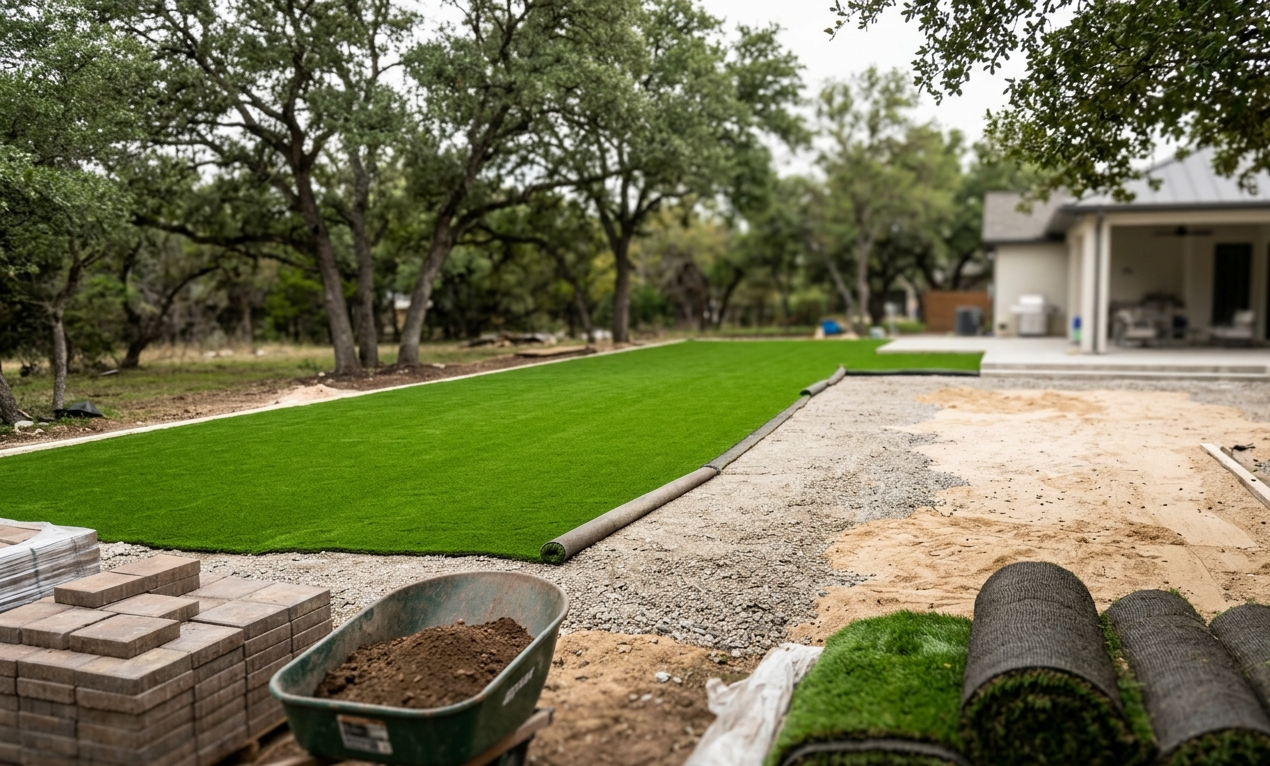
How to Plan a Full Backyard Turf Renovation

Backyard turf renovation

Renovating a backyard with synthetic turf is one of those projects that looks simple from the outside but rewards careful planning more than almost any other home improvement. Do the groundwork properly, and you end up with a lawn that looks great for fifteen-plus years. Rush the planning stage, and problems including pooling water and uneven surfaces tend to show up within the first wet season.

This guide walks you through every stage of the process, from your initial site assessment right through to selecting the right product and costing the job accurately.

Stage 1: Site Assessment

Before anything else, take a good honest look at your existing backyard. You are trying to understand what you are working with so you can plan accordingly rather than discover problems mid-installation.

Key things to check during your site assessment:

  •       Existing surface type: Is it lawn, bark chip, concrete, or pavers? Each requires a different removal approach and affects your base preparation costs.
  •       Grade and slope: Synthetic turf needs a minimum fall to drain effectively. Flat or bowl-shaped sections are a red flag that needs addressing during base preparation.
  •       Soil type: Auckland’s notorious heavy clay soil retains water and can shift seasonally. Clay sites need a more robust drainage solution than sandy or free-draining soils.
  •       Existing trees and root systems: Tree roots can push through a turf installation over time if not managed during preparation. Mark any significant root zones before quoting begins.
  •       Access: Can a small excavator or bobcat reach the space? Access constraints affect both labour cost and excavation method.
  •       Irrigation: Do you have in-ground irrigation that needs capping or rerouting? Sprinklers and synthetic turf do not work together.

Many homeowners find it useful to get a professional site assessment at this stage. An experienced installer can spot issues that are easy to miss if you have not done this work before.

Stage 2: Drainage Planning

Drainage is the single most critical element of any backyard turf renovation. Get this wrong and you will have a sodden, odorous lawn after every decent rain. Get it right and water drains through quickly, keeping the surface clean, fresh, and functional year-round.

Synthetic turf itself is permeable. Products like TigerTurf’s Envy and Summer Envy have backing systems engineered to let water drain through freely. The problem almost always lies beneath the turf, not in the turf itself.

Drainage approaches by site type:

  •       Well-draining sandy soil: A compacted aggregate base with an appropriate fall is often sufficient. Water moves through the profile quickly with minimal additional engineering.
  •       Clay soil (common across Auckland and Waikato): Requires a deeper aggregate base, potentially slotted drainage coil laid in a herringbone pattern, and sometimes a connection to a stormwater outlet. Do not underestimate this.
  •       Flat sections: Engineered grading during base preparation creates the fall needed for water to move toward a drainage outlet. This adds cost but is non-negotiable for good long-term performance.
  •       Shaded areas under dense tree canopy: Organic debris can gradually compromise drainage over time. A geotextile membrane prevents fine particles migrating into the aggregate base.

Stage 3: Base Preparation

Base preparation is where the real work happens. It accounts for a significant share of both the labour time and the final quality of your installation. A turf surface will only ever perform as well as what is underneath it.

The standard process for a full backyard renovation:

  •       Excavation: Remove the existing surface to a depth of 80 to 100mm below your finished level. Problem sites with poor drainage or unstable subgrade require greater depth.
  •       Geotextile fabric: Laid over the compacted subgrade to prevent weed growth and stop fine soil particles migrating up into the aggregate base over time.
  •       Drainage coil where required: Perforated pipe in a herringbone or grid layout, collecting and removing subsurface water on clay or poorly draining sites.
  •       Aggregate base: Compacted crushed rock, typically 20mm AP20 or similar, is built up to the correct finished level and laser-levelled to ensure a consistent surface.
  •       Top dressing layer: A finer crusher dust or top-course aggregate is often applied as a final levelling and bedding layer before turf installation begins.

Skimping on base depth or compaction is the most common cause of synthetic turf failure. Settlement, undulation, and drainage issues almost always trace back to inadequate base preparation rather than the turf product itself.

Stage 4: Choosing the Right Turf Product

With your site assessment and drainage plan complete, you are in a much better position to choose the right product. Not all synthetic turf is the same, and the right choice depends on how the space will actually be used.

TigerTurf’s residential landscape range includes products suited to different backyard applications:

  •       Envy: A popular choice for family backyards, combining a realistic appearance with solid durability under moderate foot traffic. Soft underfoot and visually convincing across most NZ light conditions.
  •       Summer Envy: Designed for warmer climates and sun-exposed areas where heat build-up can be a concern. An excellent option for north-facing yards or spaces with minimal shade through summer.
  •       PureCloud: TigerTurf’s premium residential product, delivering an exceptionally natural look and feel. The right choice for showcase gardens or homeowners for whom realism is the top priority.

As New Zealand’s only local synthetic turf manufacturer, TigerTurf products are designed and tested for NZ conditions specifically, including our high UV index, wet winters, and the wide temperature variation between regions.

Explore the full residential product range on the TigerTurf landscape page and request samples before making a final selection.

Stage 5: Costing Your Renovation Accurately

Backyard turf renovation costs vary considerably depending on site complexity, size, and product choice. Understanding the components helps you budget accurately and evaluate quotes on equal terms.

Main cost components:

  •       Excavation and disposal: Removing the existing surface and carting spoil away. Costs increase significantly with depth and when material is contaminated or heavy.
  •       Base preparation materials: Aggregate, geotextile, drainage coil, and top-dressing. A quality base typically represents 30 to 40 percent of total project cost and is not the place to cut corners.
  •       Turf supply: Priced per square metre, with premium products at the higher end. Accurate measurements before requesting quotes prevent surprises.
  •       Installation labour: Cutting, joining, tensioning, and securing the turf to the perimeter edge. Complex shapes, multiple join lines, and restricted access all add to labour time.
  •       Edging and finishing: Aluminium or timber edging gives the perimeter a clean finish and anchors the turf correctly.

As a general guide, full backyard renovation projects in New Zealand including all materials and installation typically range from $150 to $250 per square metre, with significant variation depending on the factors above. Getting two or three detailed written quotes from reputable installers gives you the clearest picture for your specific site.

The most important thing to remember: the cheapest quote rarely represents the best value. Base preparation shortcuts are invisible at the time of installation and only reveal themselves once problems emerge. By that point, the cost of remediation often exceeds the original saving.

If your property is a compact urban section, our guide to artificial turf in small urban spaces covers specific considerations for courtyards, balconies, and rooftop installations.

Thinking about turf for a home gym or garage workout space? Read our guide on choosing the best artificial grass for home gyms for specific product and underlay advice.

Telarc
World Bowls
FIH Preferred Supplier
ITF Foundation
Fifa
World Rugby
0
    0
    Your Cart
    Your cart is emptyReturn to Shop