March 25, 2026

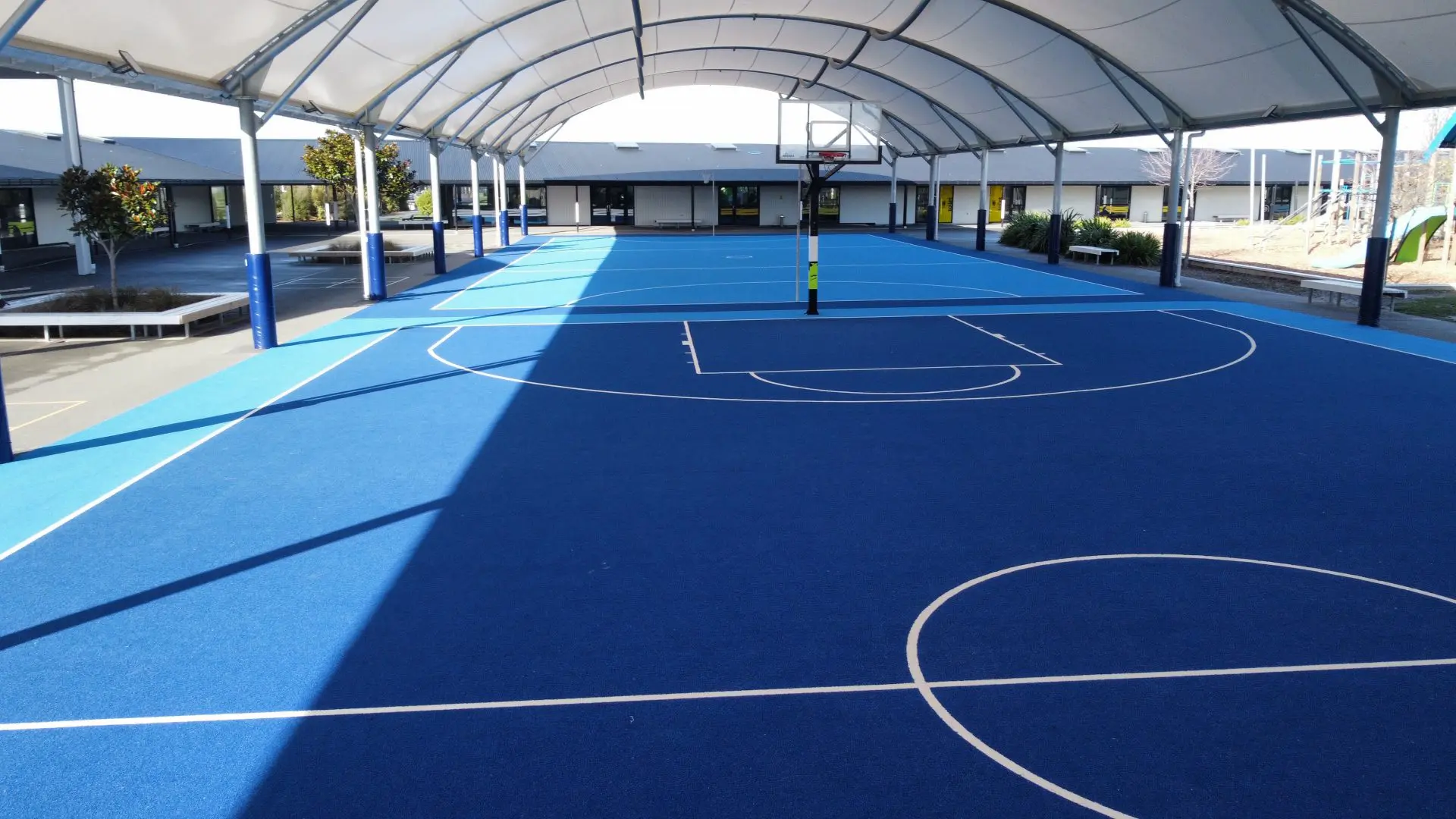
If you manage a school, sports club, or community facility in New Zealand, chances are the question of line marking has come up more than once. Do you paint them on? Have them inlaid during manufacturing? What colours work best for multiple codes? And what happens when the game codes change?
Line marking on synthetic turf is more nuanced than most people expect. Get it right and your facility looks sharp, plays well, and stays compliant for years. Get it wrong and you are looking at costly rework. Here is what every facility manager should know before committing to a solution.
Choosing the right line colours for your synthetic sports surface is partly about brand identity and partly about player safety. On natural grass, white is the standard. On synthetic turf, you have a much wider palette to work with, which is both an opportunity and a responsibility.
The key principle is contrast. Lines need to be clearly visible against the turf pile colour in all lighting conditions, whether that is a sun-drenched Saturday afternoon or a floodlit Friday night. Here are the general colour guidelines used across NZ sport codes:
If your facility hosts multiple sports, a multi-code colour strategy, where each sport gets a distinct line colour, is the cleanest approach. TigerTurf synthetic sports surfaces are engineered with consistent pile colour across each roll, which makes multi-colour line work visually clean and easier to read from all angles.
Painted lines are applied after installation using specialist turf-marking paint. They are a practical choice when:
The trade-off is durability. UV exposure, heavy foot traffic, and regular cleaning will gradually fade painted lines. On a well-maintained synthetic turf surface, most painted lines need refreshing every two to four years depending on usage intensity. New Zealand’s high UV index, particularly in the North Island, accelerates this fading compared with more temperate climates.
Inlaid lines are manufactured directly into the turf during production. Strips of contrasting colour pile are integrated into the backing at precise positions so the lines are essentially part of the surface itself from day one.
Inlaid lines are the premium option for permanent multi-sport facilities because:
The critical requirement for inlaid lines is that your line layout must be finalised before manufacturing begins. This makes pre-installation planning absolutely essential. The TigerTurf team works with facility managers through this process to ensure nothing is missed before production starts.
This is where many facilities trip up. Each sport code has its own governing body requirements for court dimensions, line widths, and run-off zones. Installing lines without confirming exact specifications with the relevant national body can result in a court that cannot be used for sanctioned competition.
Key compliance dimensions for common NZ sport codes:
TigerTurf’s Tournament 1000 is designed specifically for high-performance sports applications where dimensional accuracy and surface consistency are non-negotiable. As New Zealand’s only local synthetic turf manufacturer, every surface can be specified to meet the exact requirements of your chosen sport code.
Explore the full range of compliant synthetic turf sports surfaces to find the right solution for your facility.
Before approaching any supplier or installer, work through these questions so you arrive with a clear brief rather than a vague request:
Getting these answers sorted before installation saves considerable time, money, and frustration. The TigerTurf team can help you work through the options and connect you with the right installation expertise for your region.
If you are also considering your facility’s wider outdoor upgrade, our guide on how to plan a full backyard turf renovation covers base preparation, drainage, and costing in detail.
How can we help?
Whether you need a surface solution for sports, leisure, or landscaping, our product range and expertise are second to none. Our experts are with you all the way, from selection to installation to maintenance: we pride ourselves on our exceptional customer service. So, what would you like to do next?