How to Prevent Weeds from Growing Through Artificial Grass
If you have noticed weeds pushing through or growing up around the edges of a synthetic lawn, you are not alone. It is one of the most common complaints from homeowners who invested in artificial turf expecting a completely maintenance-free lawn, only to find nature finding a way regardless.
The good news is that weed intrusion on a quality synthetic turf installation is largely preventable. Understanding where weeds actually come from and how to address each source gives you the tools to deal with it properly, rather than pulling the same weeds out season after season.
Why Weeds Appear on Synthetic Turf at All
Synthetic turf itself does not support weed growth. There is no soil, no nutrients, and no moisture retention in the pile itself that would allow a weed to establish and thrive. So where do they come from?
There are three main sources of weed growth on synthetic turf installations:
- Airborne seeds settling on the surface: Wind and birds deposit seeds onto the turf surface. If organic debris, dust, or infill has accumulated, these seeds can find just enough material to germinate on top of the turf before their roots work down through the backing.
- Roots from adjacent garden beds and lawn edges: Lateral root systems from nearby plants, particularly vigorous grasses and ground covers, can grow horizontally under the edging and emerge through the turf backing.
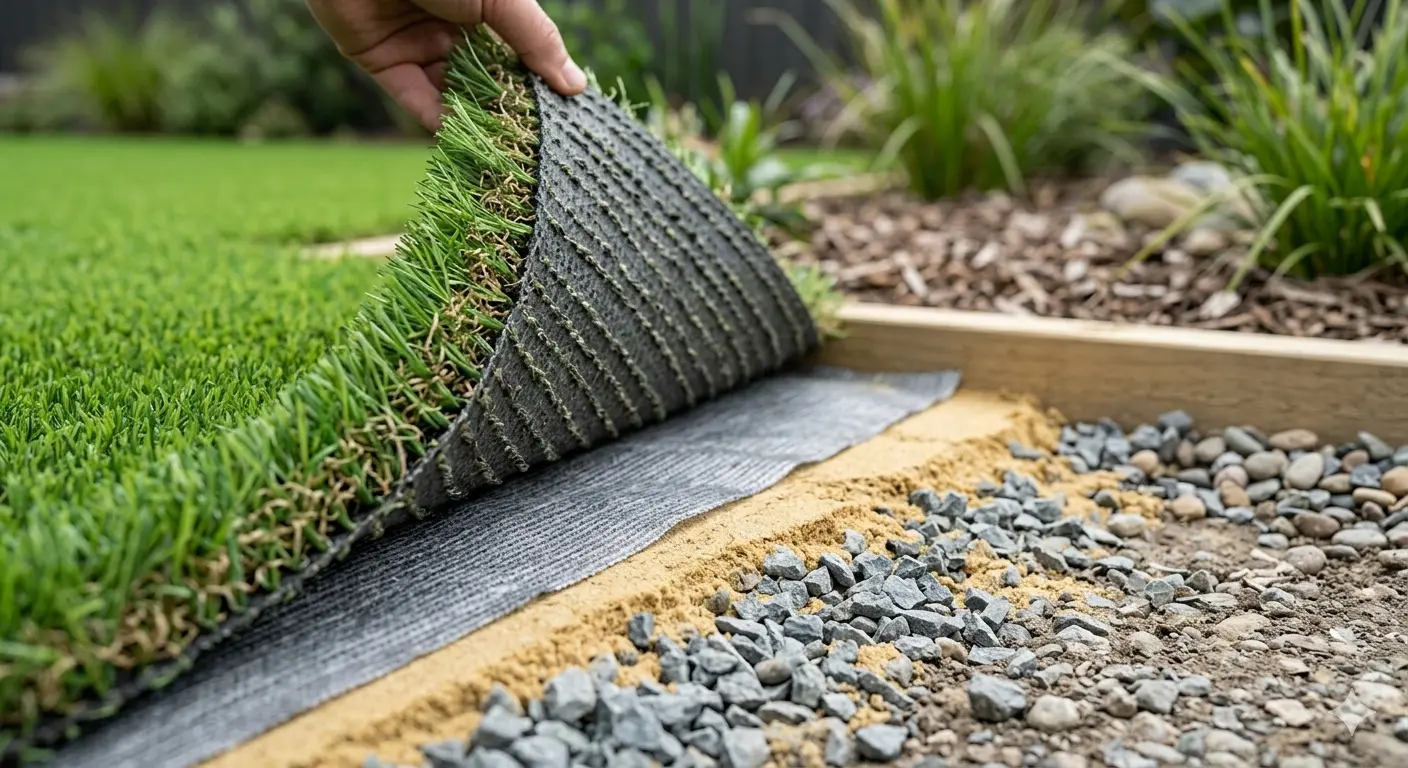
- Inadequate or degraded weed membrane below the turf: If the geotextile membrane installed beneath the turf was low quality, poorly overlapped, or has degraded over time, weed seeds in the soil below can germinate and push upward.
Most weed problems on synthetic turf trace back to one or more of these three sources. Solving the problem long-term means addressing the right source rather than simply pulling weeds as they appear.
Weed Mesh: Your First Line of Defence
A quality geotextile weed membrane is the foundation of weed prevention beneath synthetic turf, and getting this right at the installation stage is far easier than trying to address weed problems after the fact.
What makes a weed membrane effective:
- Weight and density: Heavier geotextile fabrics are more resistant to root penetration than lightweight landscape fabric. For residential turf installations, a commercial-grade geotextile membrane is the appropriate specification.
- Overlap at joins: Weed membrane installed in strips must overlap by a minimum of 200mm at each join. Gaps at joins are the most common point of failure in weed membrane systems. If a membrane was installed with inadequate overlap, weeds will appear consistently along those seam lines.
- Full coverage without gaps: The membrane should extend edge-to-edge, including into the edging channel and up behind any retaining or edging board. Any uncovered soil is a potential establishment point.
- UV resistance of the membrane itself: A membrane that degrades in sunlight will fail in exposed edge zones over time. Specify a UV-stabilised geotextile, particularly in North Island installations with high UV exposure.
If your current installation has a weed problem that seems to originate from below the turf rather than from surface seed fall, the membrane is the likely culprit. In some cases this can be addressed by lifting the turf edge, correcting the membrane, and re-securing the turf, though this is work for an experienced installer.
Edging: Stopping Lateral Root Intrusion
The boundary between your synthetic turf and adjacent garden beds, lawn areas, or neighbours’ gardens is where lateral root intrusion happens. Grass runners and ground cover roots do not stop at a visible line. Without a physical barrier, they follow moisture and warmth under the edging and emerge through the turf pile.
Edging strategies that prevent lateral intrusion:
- Aluminium or steel edging boards: The standard approach for synthetic turf installations. A well-fitted metal edging board creates a clean visual edge and provides a meaningful barrier to shallow lateral roots. The key is ensuring the board is set deep enough into the ground, typically 100mm or more, rather than just sitting on the surface.
- Root barrier membrane at bed boundaries: Where garden beds with vigorous plantings adjoin the turf, a vertical root barrier membrane installed to a depth of 300mm along the full boundary stops lateral roots reliably. This is particularly important in gardens with running grasses, bamboo, or any aggressive ground covers.
- Regular edge inspection: Once or twice a year, check the perimeter of your turf installation for any runners or roots that have reached the edge. Removing them while they are small prevents them from establishing under the turf and becoming a larger problem.
Well-fitted edging is also important for the structural longevity of your turf installation. Edges that are poorly secured or missing entirely allow turf to lift, curl, and degrade at the perimeter, which accelerates wear and creates gaps for weed establishment.
Base Preparation: Getting It Right Before the Turf Goes Down
A correctly prepared base dramatically reduces the long-term weed burden on a synthetic turf installation. If you are planning a new installation, investing properly in the base is the most effective weed prevention measure available to you.
Base preparation elements that prevent weed growth:
- Full removal of existing organic material: Any lawn, roots, bark, or organic topsoil left in place will continue to host weed seeds and support germination below the membrane. Full excavation to a consistent depth removes this material and gives you a clean start.
- Compacted aggregate base: A well-compacted aggregate base creates a physical environment that is hostile to root establishment. Loose, poorly compacted bases allow voids where roots and seeds can find purchase.
- Correct drainage design: Poorly drained bases remain moist, which creates far more favourable conditions for weed germination than a free-draining aggregate profile. Good drainage is not just about surface performance. It also makes the below-surface environment actively unfavourable for weed growth.
Our full guide on how to plan a backyard turf renovation covers base preparation in detail, including excavation depth, geotextile specification, and aggregate selection.
Seasonal Prevention: Staying Ahead of the Problem
Even with a perfectly installed base and membrane, some airborne seed fall is inevitable. A basic seasonal maintenance routine prevents the small number of seeds that land on your turf from ever becoming established weeds.
Seasonal weed prevention tips:
- Autumn clear-up: Leaf fall and organic debris are the primary medium through which airborne seeds establish on turf surfaces. A thorough clear-up and brush in autumn removes this material before winter rains compact it into the pile.
- Spring inspection: Spring is when weed seeds germinate most aggressively. A quick inspection of the turf surface and perimeter edges in early spring lets you catch any emerging seedlings before they establish a root system through the backing.
- Use a turf-safe spot treatment where needed: Where individual weeds do establish on the surface, a diluted turf-safe weedkiller applied directly to the plant resolves the problem without damaging the turf fibres or backing. Avoid broadcast spraying of weedkiller across the whole surface as a preventive measure as this is unnecessary and risks fibre damage with some formulations.
- Keep edges clear of organic build-up: Debris that accumulates along the edging boundary creates ideal germination conditions for seeds blowing in from adjacent beds. Keep this zone clean as part of your regular maintenance routine.
What to Do If Weeds Are Already Established
If weeds have already established through your turf, the approach depends on how widespread the problem is.
- Isolated surface weeds: Pull or spot-treat individually. If the root has not fully penetrated the backing, removal is clean and the surface closes back over without lasting damage.
- Weeds emerging along edge lines: This indicates lateral root intrusion. Address the edging barrier at the affected section and remove the established plants. Edge repair is straightforward for an installer.
- Widespread emergence across the surface: This typically indicates membrane failure below the turf. Depending on the age and condition of the installation, the options range from targeted membrane repair at lifted sections to a full reinstallation over a correctly specified base.
In most cases, weed problems on synthetic turf are manageable and do not require full reinstallation. An experienced installer can diagnose the source accurately and recommend the most proportionate solution.
Preventing weeds is closely connected to the long-term performance of your turf. For a broader view on what affects durability, read our guide on how long synthetic turf lasts in NZ conditions.
Ready to install artificial grass with the right weed prevention foundation from day one? Find your nearest TigerTurf installer and request a free site assessment.