

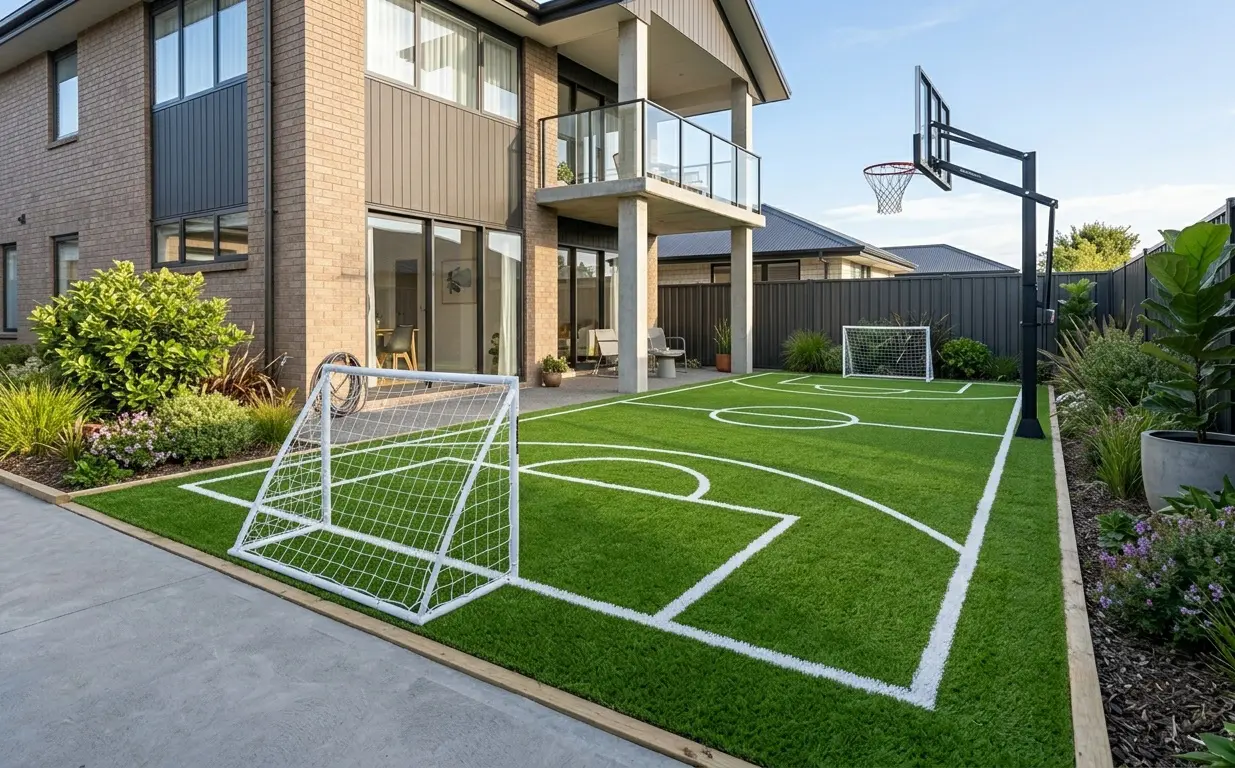
From Backyard to Mini Sports Arena: Designing a Family Play Zone

Family play zone

Backyards are underused. For most Kiwi families, the lawn is something to look at and occasionally kick a ball across rather than a space that is actively designed for how the family actually lives. But with a bit of thought and the right surface underfoot, a standard New Zealand backyard can become a genuinely multi-use family sports and play zone that gets used every day.

Synthetic turf is the foundation of most well-designed family play spaces, and for good reason. It handles the kind of year-round, all-weather punishment that kids deliver without turning into a muddy disaster zone by June. Here is how to think through the design from scratch.

Start With How Your Family Actually Plays

The most common mistake in designing a backyard play zone is starting with what looks good online rather than what the household actually does. Before deciding on any surface product or layout, spend a week noticing what your kids gravitate toward.

  •       Do they mostly kick a ball around, or is it more net sports like badminton or basketball?
  •       Is there a specific age range to design for now, or does the space need to grow with younger children over the next decade?
  •       Do adults use the space for fitness, or is this primarily a kids and family entertaining area?
  •       Do you have pets that will share the space?

A family with young children and a dog has different needs from a household of teenagers who want to shoot hoops or a family that entertains regularly. Getting clear on this first makes every subsequent decision easier and avoids the regret of building something nobody actually uses the way you imagined.

Choosing the Right Turf Product for Family Use

Not all synthetic turf performs equally under the demands of active family use. The key considerations for a family play zone are softness and safety underfoot, durability under heavy and varied use, and how the surface handles pets.

TigerTurf products suited to family play zones:

  •       Envy: A versatile mid-pile product that balances realism with solid durability under regular foot traffic and play. Works well in general family backyard settings where the lawn doubles as an entertaining area.
  •       Summer Envy: Particularly well-suited to north-facing yards or sun-exposed play areas where heat build-up on the surface is a concern in summer. Its heat-management properties make barefoot play more comfortable through the warmer months.
  •       PureCloud: TigerTurf’s premium residential product, with a softer feel underfoot that suits families prioritising comfort for younger children who spend a lot of time on the ground. The most realistic-looking option for spaces where aesthetics matter alongside function.

As New Zealand’s only local manufacturer, TigerTurf products are UV-stabilised and tested for NZ conditions. Explore options on the artificial grass product pages.

Layout Ideas: Making the Space Work Harder

A well-designed backyard sports and play zone does not need to look like a public facility. The goal is a space that accommodates multiple activities across different ages without feeling chaotic or over-engineered.

Zoning strategies that work in typical NZ backyards:

  •       Central open turf zone: Keep the largest portion of the space open and unmarked. This is your most flexible area, usable for ball sports, general play, yoga, or entertaining depending on the day.
  •       Hard surface zone: A small area of pavers or concrete adjacent to the turf handles outdoor dining furniture, a barbecue, and foot traffic from the house without compressing the turf pile in one spot.
  •       Defined play structure area: If you have a swing set, trampoline, or climbing frame, place it on a dedicated section of turf with a slight buffer from other activity zones. This protects the surrounding turf from the concentrated wear that play equipment creates directly underneath.
  •       Goal or wall zone: A rebounding wall or painted goal area at one end of the space gives ball sports a defined target without constraining the open zone.

Multi-sport layouts for larger backyards:

  •       A half basketball court (roughly 14m x 15m) with a single hoop and key markings is achievable in a standard suburban backyard and covers shooting practice, one-on-one games, and general fitness use.
  •       A futsal or small-sided football zone with portable goals is adaptable and avoids permanent markings if the family’s sport preferences might change.
  •       A combination cricket pitch strip down the centre of a longer yard, with the surrounding turf providing outfield area, suits backyards with a length of 18 metres or more.

Line Markings: When to Add Them and How

Line markings on a family play zone are a genuine enhancement for sport-specific use, but they come with a commitment. Before adding them, be confident the sport code will remain relevant for the family over the next several years.

Painted lines vs inlaid lines for family spaces:

  •       Painted lines are the flexible choice for family spaces. They can be refreshed, changed, or added to as the family’s needs evolve. The trade-off is that they will need touching up every few years, particularly under New Zealand’s UV conditions.
  •       Inlaid lines are permanent and require the layout to be finalised before the turf is manufactured. They are the better option for families with older children who are committed to a specific sport and want a professional-quality surface.

For multi-sport family spaces, a simple colour-coded approach, where each sport gets a distinct line colour, keeps a busy court readable without the lines becoming a visual mess.

For detailed guidance on line specifications, colour selection, and sport-code compliance, see our guide on sport court line marking on synthetic turf.

Accessory Tips: Completing the Play Zone

Safety surfacing under play equipment:

Where young children are using climbing frames or swing sets, the fall zone beneath the equipment benefits from additional cushioning. A shock pad underlay beneath the turf in these specific zones increases impact attenuation significantly. Specify this for the equipment zone only and let the wider surface remain unpadded for sport and general use.

Goals, hoops, and nets:

  •       Ground-anchored basketball hoops can be fixed into an aggregate base during installation. Plan this in advance, as retrofitting a fixed post anchor into an existing turf installation is disruptive.
  •       Portable goals are the more flexible option for football and hockey, requiring no base modification and easily stored when not in use.
  •       Badminton and volleyball nets on portable stands work well on a flat turf surface and require nothing from the installation itself.

Lighting:

If your family is likely to use the space in the evenings, particularly during New Zealand’s shorter winter days, low-level garden lighting around the perimeter of the play zone extends usable hours significantly and makes the space feel considered rather than functional-only.

Fencing and boundary definition:

A clearly defined boundary between the turf zone and garden beds, paved areas, or neighbouring properties does two things: it protects the turf installation from root encroachment and edging wear, and it gives the space a finished, intentional appearance. Aluminium edging at the turf perimeter is the standard approach and handles the NZ climate reliably over the long term.

If you are starting from scratch with your backyard, our planning guide on artificial turf backyard renovation covers site assessment, drainage, base preparation, and costing in full.

Telarc
World Bowls
FIH Preferred Supplier
ITF Foundation
Fifa
World Rugby
0
    0
    Your Cart
    Your cart is emptyReturn to Shop